



As AI workloads, cloud services, and east-west traffic push data center fabrics beyond 100G, many teams are planning 400G upgrades. The hardware is only part of the decision. Two 400G transceiver modules can look identical in a spec table yet behave very differently once they are installed in your switches and cabling plant. This guide covers the features that matter most when evaluating a 400G optical transceiver, so you can shortlist the right option before you buy.
1. Form Factor: QSFP-DD or OSFP
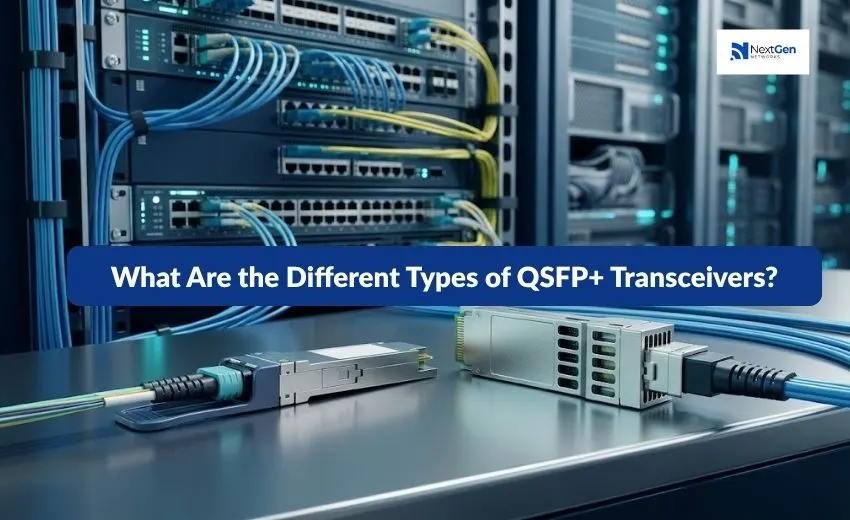
The first filter is the port on your switch or router. A 400G QSFP-DD transceiver fits QSFP-DD ports, which are designed to accept lower-speed QSFP modules as well, a useful point for phased migrations. A 400G OSFP transceiver fits OSFP ports, which use a larger module body and are often chosen where thermal headroom is a priority. The two form factors are not interchangeable, so confirm the port type on every platform before ordering.
2. Reach and Optical Standard
Reach depends on the optical standard, and picking the right one avoids overspending or under-delivering on distance. Common 400G Ethernet transceiver types include:
- SR8: multimode fiber, typically around 100 m on OM4, with an MPO-16 connector.
- DR4: single-mode fiber, typically up to 500 m, with an MPO-12 connector.
- FR4: single-mode fiber, typically up to 2 km, with duplex LC connectors.
- LR4: single-mode fiber, typically up to 10 km, with duplex LC connectors.
Longer-reach coherent options also exist for data center interconnect. Exact reach and connector details vary by manufacturer and part number, so check the datasheet for each module you consider.
3. Fiber Type and Connector Compatibility
Your existing cabling often decides the shortlist. Multimode plants point toward SR8-class optics, while single-mode plants open up DR4, FR4, and LR4. Connector type matters just as much. MPO-based modules need matching parallel-fiber cabling and polarity, while duplex LC modules work with conventional patching. Reviewing fiber grade, connector style, and patch panel layout early prevents costly re-cabling.
4. Power Consumption and Thermal Design
High-speed optical transceivers generate more heat than their predecessors, and power draw differs between standards and vendors. Compare the rated power of each module against your switch’s per-port and total thermal budget, especially in fully populated line cards. Airflow design in the rack also plays a role. Lower-power modules can ease cooling demands in dense 400G data center connectivity deployments.
5. Breakout Support
Many operators run 400G at the spine and 100G at the leaf or server edge. Some module types, such as DR4, can break out into four 100G links when paired with suitable cabling and a switch that supports the mode. If your design includes breakout, verify support on both the transceiver and the platform side.
6. Compatibility and Coding
400G transceiver compatibility goes beyond physical fit. Switches may check module coding, firmware support, and software versions. A module that works in one platform or software release may not be accepted in another. Before purchasing, share the exact switch models and OS versions with your supplier so compatibility can be confirmed up front, particularly in multi-vendor environments.
7. Diagnostics, Quality, and Testing
Digital diagnostics monitoring (DDM/DOM) lets your team track temperature, optical power, and voltage, which helps with proactive maintenance and faster troubleshooting. When evaluating 400G optical transceiver features, also ask how modules are tested and verified before shipping, and what support is available if a link behaves unexpectedly.
Sourcing 400G Optics for Your Network
NextGen Networks supplies optical transceivers and networking hardware for enterprise, data center, and telecom environments. Its website lists SFP, SFP+, QSFP, and CFP modules across 1G to 800G, DAC and AOC cables, fiber patch cords, and products from brands including Cisco, Finisar, Arista, Juniper, and others. Its Cisco listings include 400G modules such as QDD-400G-DR4-S, QDD-400G-FR4-S, QDD-400G-LR4-S, and QDD-400G-SR8-S. The company also offers data center networking and high-speed interconnect support, which can help when planning 400G networking solutions around existing infrastructure. Availability and compatibility vary by part number and platform, so it is best to confirm details for your specific requirement.
Conclusion
Choosing the right module comes down to a few practical checks: form factor, reach and standard, fiber and connector type, power and thermal limits, breakout needs, platform compatibility, and diagnostics. Working through them in order helps you narrow the field quickly and avoid rework.
To discuss compatible 400G optical modules for your network, contact NextGen Networks at sales@nextgennetworks.in or +91-9650398500, or use the Contact Us page. Share your switch models, fiber type, and link distances, and the team can help you identify suitable options.